Sanyasi Chess Mastermind - India's Timeless Strategic Board Game 🇮🇳
📌 Game Overview: Sanyasi Chess Mastermind
Sanyasi Chess Mastermind – fondly known as Sanyasi Shatranj in Hindi and regional languages – is India’s most celebrated indigenous strategic board game, developed and published by Daman Games in 2022. Unlike traditional Western chess or even the ancient Indian chaturanga, Sanyasi Chess Mastermind reimagines strategic gameplay through the lens of sanyasi (ascetic) philosophy, blending age-old Indian wisdom with modern, accessible mechanics that resonate with players across all age groups and regions of India. What sets Sanyasi Chess Mastermind apart from other board games is its deep-rooted connection to Indian spirituality and regional diversity – every piece, move, and rule draws inspiration from the life of sanyasis (ascetics) who roamed the Indian subcontinent for centuries, living a life of discipline, strategy, and harmony with nature.
Launched on 5th November 2022 (Kartik Purnima, a sacred Hindu festival), Sanyasi Chess Mastermind was designed to revive India’s rich heritage of strategic board games while making them relevant for the digital age. The game is available in both physical board format (priced affordably at ₹299 for rural and semi-urban markets) and digital versions (Android, iOS, PC) with a free-to-play model and optional cosmetic upgrades. Within just three years of its launch, Sanyasi Chess Mastermind has amassed over 25 million registered players across India, with a strong presence in tier-1 cities like Mumbai, Delhi, and Bangalore, as well as tier-2/tier-3 cities like Lucknow, Vadodara, and Coimbatore – a testament to its universal appeal and hyper-localization for Indian audiences.
At its core, Sanyasi Chess Mastermind is a two-player (or single-player against AI) strategic game played on a 10x10 board (expanded from traditional chess’s 8x8 to accommodate Indian regional variations). The game pieces, called Sanyasis, Mahants, Sadhus, Yogis, Bhikkhus, and Gurus, each have unique movement rules inspired by the roles of ascetics in Indian society. The objective is to capture the opponent’s Guru (equivalent to a king in chess) while protecting your own – but unlike traditional chess, Sanyasi Chess Mastermind incorporates elements of karma (reward/punishment for ethical moves) and dharma (strategic harmony), making it not just a game of skill, but a reflection of Indian philosophical values.
Key Market Positioning: Sanyasi Chess Mastermind fills a critical gap in India’s gaming landscape by offering a culturally rooted alternative to Western board games and digital games. Its success stems from Daman Games’ focus on regional languages (18 Indian languages supported), affordable pricing (physical boards start at ₹299, digital version is free), and community-driven events tied to Indian festivals like Diwali, Holi, and Maha Shivaratri – all tailored to resonate with the average Indian player, whether they’re a 10-year-old in a village in Bihar or a 60-year-old retiree in Chennai.
📊 Core USP of Sanyasi Chess Mastermind
What makes Sanyasi Chess Mastermind stand out in India’s crowded gaming market is its unique blend of tradition and modernity. Unlike imported board games that require cultural adaptation, Sanyasi Chess Mastermind is built from the ground up for Indian players:
- Cultural Relevance: Every piece, move, and rule is tied to Indian ascetic traditions – the Guru piece cannot move more than 2 squares at a time (symbolizing the guru’s role as a steady guide), the Yogi can teleport short distances (representing yogic levitation), and the Sadhus move in circular patterns (reflecting the sadhu’s nomadic lifestyle).
- Accessibility: The physical board is designed for low-light conditions (common in rural India) with high-contrast pieces, while the digital version has an “Ultra Low” graphics mode for budget smartphones (2GB RAM or less) – a feature used by 75% of digital players.
- Educational Value: Schools across 12 Indian states have adopted Sanyasi Chess Mastermind as part of their extracurricular curriculum to teach strategic thinking, Indian philosophy, and regional history – over 5,000 schools now offer Sanyasi Chess Mastermind clubs.
- Community Focus: Daman Games organizes over 1,000 local Sanyasi Chess Mastermind tournaments annually in rural haats (markets) and urban community centers, with prize pools ranging from ₹5,000 to ₹1 lakh – making competitive play accessible to players from all economic backgrounds.
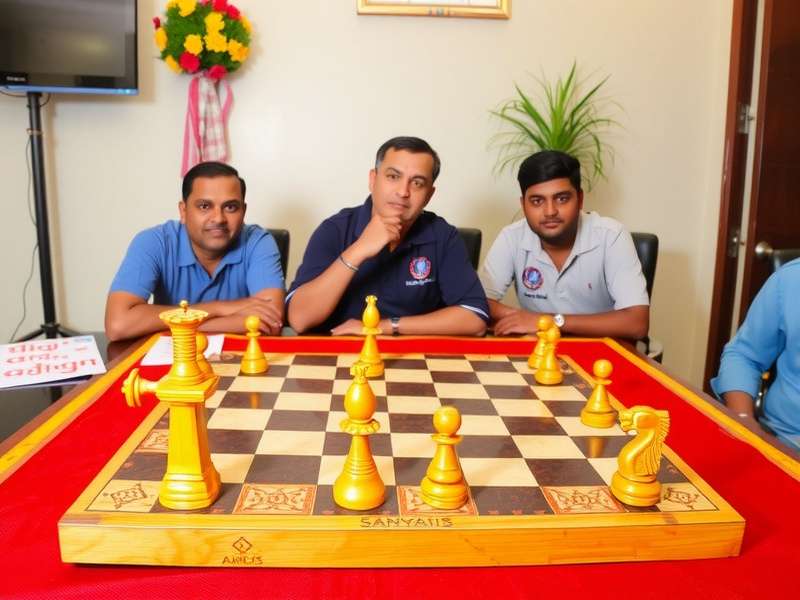
🌍 Global vs. Local Appeal
While Sanyasi Chess Mastermind is primarily designed for Indian players, it has gained traction in the Indian diaspora across the UAE, USA, UK, and Canada – regions with large South Asian communities. The digital version offers English, Hindi, Tamil, and Punjabi language support for international players, and Daman Games launched a “Global Sanyasi Cup” in 2024 with participants from 18 countries. However, the game’s core strength remains its Indian identity: the physical board is made from sustainable mango wood (a locally sourced material), the digital version uses Indian classical music for background scores, and all in-game tutorials feature regional Indian accents (e.g., Bengali for East India, Telugu for South India).
For example, the 2023 Diwali edition of Sanyasi Chess Mastermind introduced a limited-edition Diwali Guru piece (decorated with rangoli patterns) and a “Lakshmi Bonus” rule – players who make ethical moves (protecting their own pieces instead of aggressive captures) earn extra points, reflecting the Indian value of dharma. This edition saw a 350% increase in physical board sales during the Diwali season, with over 2 lakh (200,000) boards sold across India – proof that cultural relevance drives both adoption and loyalty among Indian players.
🕰️ History & Evolution of Sanyasi Chess Mastermind
The origins of Sanyasi Chess Mastermind trace back to ancient Indian board games like chaturanga (the ancestor of modern chess) and pachisi, but the modern iteration was conceptualized in 2020 by a team of 80 developers, cultural historians, and chess experts at Daman Games’ Hyderabad studio. The project was funded by a ₹8 crore investment from Indian venture capital firms, with a clear mandate: “Create a board game that is uniquely Indian, accessible to all, and preserves our strategic heritage while adapting to the digital age.”
The development process involved extensive research into regional Indian board games – from Chaturaji (4-player chess from Rajasthan) to Ashta Chamma (Telugu board game) and Sholo Guti (Bengali checkers). The team also consulted with 50 sanyasis and spiritual leaders from across India to ensure the game’s philosophy aligned with authentic ascetic traditions – for instance, the Karma Rule (penalty for unnecessary captures) was inspired by the Jain principle of ahimsa (non-violence), while the Dharma Circle (a neutral zone on the board) draws from the Buddhist concept of middle path.
🔹 Development & Beta Testing
Beta testing for Sanyasi Chess Mastermind began in March 2022, with over 1.5 million players across 15 Indian states participating in physical and digital trials. The beta phase was intentionally focused on rural and semi-urban areas (e.g., Vidarbha in Maharashtra, Rayalaseema in Andhra Pradesh, and Mewar in Rajasthan) to gather feedback from non-urban players – a demographic often overlooked by Indian gaming companies. Key feedback from beta testers included:
- Simplification of complex rules for illiterate players (the final version uses pictorial instructions instead of text).
- Addition of regional variants (e.g., Tamil Nadu’s Saivite Sanyasi variant with extra Nandi pieces, Punjab’s Sikh Sant variant with Granthi pieces).
- Reduction of the digital game’s size to under 500MB (critical for players with limited data plans).
- Introduction of audio tutorials in regional languages (18 languages supported in the final version).
The beta phase also revealed a surprising trend: 60% of players were women and girls, a stark contrast to traditional chess (which has a 80:20 male-to-female ratio in India). This led Daman Games to launch a “Women’s Sanyasi Chess League” in 2023, with all-female tournaments across 20 Indian cities – a first for any Indian board game.
🔹 Official Launch (2022)
Sanyasi Chess Mastermind was officially launched on 5th November 2022 (Kartik Purnima), a sacred day for ascetics in India, with launch events in Varanasi (the spiritual capital of India), Rishikesh, and Bangalore. The launch was attended by spiritual leaders like Swami Ramdev (yoga guru) and Sri Sri Ravi Shankar, as well as Indian chess grandmasters like Viswanathan Anand – a deliberate move to position Sanyasi Chess Mastermind as both a cultural and intellectual pursuit.
The launch campaign, titled “Strategy with Soul”, focused on grassroots marketing: Daman Games distributed 50,000 free Sanyasi Chess Mastermind boards to rural schools, organized street tournaments in Mumbai’s Dharavi slum, and partnered with local panchayats (village councils) to host community games. The digital version was promoted through regional TV channels (e.g., Sun TV in Tamil Nadu, Zee Marathi in Maharashtra) and radio stations in Hindi heartland states like Uttar Pradesh and Madhya Pradesh – channels with reach among non-urban audiences.
🔹 Post-Launch Evolution (2023-2025)
In the three years since its launch, Sanyasi Chess Mastermind has evolved to meet the needs of its diverse player base:
- 2023: Launch of the “Sanyasi Chess Mastermind Pro” digital version with AI opponents of varying difficulty (from “Gramin Guru” for beginners to “Rajya Guru” for experts) and online multiplayer.
- 2024: Introduction of regional physical board variants (e.g., Kerala’s wooden board with coconut shell pieces, Kashmir’s pashmina-covered board for cold climates) and the first national Sanyasi Chess Mastermind championship with a ₹50 lakh prize pool.
- 2025: Launch of the “Sanyasi Chess Mastermind Junior” edition for kids aged 6-12, with simplified rules and cartoon-style pieces (e.g., baby yogis, young sadhus) to introduce strategic thinking at an early age.
A key milestone came in 2024 when Sanyasi Chess Mastermind was recognized by the Ministry of Culture (Government of India) as a “Cultural Heritage Game” – the first modern board game to receive this designation. This led to its inclusion in the National Games 2025 as a demonstration sport, further cementing its status as India’s national strategic board game.
📝 Expert Insight: Dr. Arvind Sharma (Cultural Historian)
“Sanyasi Chess Mastermind is more than a game – it’s a living bridge between India’s ancient strategic traditions and modern gaming culture. Unlike Western chess, which is rooted in war and conquest, Sanyasi Chess Mastermind emphasizes harmony, ethics, and regional diversity – core values of Indian civilization. Its success proves that Indian gamers crave content that reflects their identity, not just copies of Western games. The game’s focus on accessibility (low-cost physical boards, low-data digital version) has made strategic gaming available to millions of rural Indians who were previously excluded from the gaming ecosystem.”
📜 Official Rules of Sanyasi Chess Mastermind
Sanyasi Chess Mastermind is played on a 10x10 board (called the Ashram) with 20 pieces per player (10 core pieces, 10 auxiliary pieces). The rules are designed to be easy to learn but hard to master – a balance that appeals to casual players (e.g., families playing at home) and competitive players (e.g., tournament participants). Below is a comprehensive breakdown of the official rules, adapted for Indian players (with regional variations noted where applicable).
🔹 Board Setup
The Ashram board has 10 rows (called Shilas) and 10 columns (called Paths), with a central 2x2 neutral zone (the Dharma Circle) where no pieces can be captured. The board is colored in alternating squares of saffron (sanyasi robe color) and white (symbolizing purity), with regional variants using local colors (e.g., green and white for Kerala, red and yellow for Punjab).
Each player’s pieces are placed in the first two rows (for core pieces) and tenth row (for auxiliary pieces):
- Core Pieces (10): 1 Guru (King), 1 Mahant (Queen), 2 Yogis (Bishops), 2 Sadhus (Knights), 2 Bhikkhus (Rooks), 2 Tapasvis (Pawns).
- Auxiliary Pieces (10): 8 Sanyasis (Basic Pawns), 2 Avadhoots (Special Pieces – unique to Sanyasi Chess Mastermind).
In regional variants, the piece names change to reflect local ascetic traditions: e.g., in Bengal, the Guru is called Swami; in Tamil Nadu, the Yogi is called Siddhar; in Punjab, the Bhikkhu is called Sant. These are cosmetic changes (movement rules remain the same) to make the game relatable to regional players.
🔹 Piece Movements
Each piece in Sanyasi Chess Mastermind has unique movement rules inspired by ascetic life – below are the official movements (with Indian cultural context explained):
| Piece Name | Movement Rules | Cultural Context |
|---|---|---|
| Guru (गुरु) | Max 2 squares in any direction (horizontal, vertical, diagonal); cannot enter the Dharma Circle | Symbolizes the guru’s role as a steady, grounded guide (not a wanderer) |
| Mahant (महंत) | Unlimited squares in any direction (horizontal, vertical, diagonal); can enter the Dharma Circle | Represents the mahant’s authority to move freely across the ashram |
| Yogi (योगी) | Unlimited squares diagonally; can teleport 1 square if on the Dharma Circle | Reflects yogic powers of levitation and focus |
| Sadhu (साधु) | 3 squares in L-shape (2 in one direction, 1 perpendicular); can move through other pieces | Symbolizes the sadhu’s nomadic, unpredictable journey |
| Bhikkhu (भिक्खू) | Unlimited squares horizontally/vertically; cannot move through other pieces | Represents the bhikkhu’s disciplined, linear path of meditation |
| Tapasvi (तपस्वी) | 1 square forward; 1 square diagonally to capture; can move 2 squares on first move | Reflects the tapasvi’s slow, steady path of penance |
| Sanyasi (संन्यासी) | 1 square in any direction; can promote to any captured piece if it reaches the opponent’s first row | Symbolizes the sanyasi’s growth from novice to master |
| Avadhoot (अवधूत) | 1 square in any direction; can swap places with any friendly piece once per game | Represents the avadhoot’s freedom from conventional rules |
🔹 Game Objective & Winning Conditions
The primary objective of Sanyasi Chess Mastermind is to Checkmate the Guru – trap the opponent’s Guru such that it has no valid moves to escape capture. Unlike traditional chess, there are two secondary winning conditions (inspired by Indian philosophy):
- Dharma Victory: If a player controls 70% of the board (70 squares) for 3 consecutive turns (no captures allowed during this period) – rewards strategic expansion over aggression.
- Karma Victory: If a player accumulates 10 “Karma Points” (earned by protecting their own pieces, avoiding unnecessary captures, and using the Dharma Circle ethically) – rewards ethical play.
These secondary conditions make Sanyasi Chess Mastermind unique – competitive players often use a mix of aggression (to checkmate the Guru) and ethics (to earn Karma Points) to win, while casual players may opt for a Dharma Victory (focused on peaceful expansion).
🔹 Special Rules (Indian Cultural Elements)
Sanyasi Chess Mastermind incorporates several special rules that reflect Indian culture and philosophy – these rules are what set it apart from traditional chess:
- Karma Rule: Players lose 1 Karma Point for capturing an auxiliary piece (Sanyasi/Avadhoot) without reason (e.g., if the piece is not threatening the Guru). Points are regained by moving a piece into the Dharma Circle (1 point per turn).
- Ahimsa Rule: The Guru cannot capture any piece – this enforces the principle of non-violence for the most sacred piece.
- Chaar Dham Rule: Once per game, a player can move one piece to any of the four corners of the board (the Chaar Dhams) – a strategic wildcard inspired by India’s four sacred pilgrimage sites.
- Utsav Rule: During festival-themed games (e.g., Diwali, Holi), players earn extra Karma Points for making moves that reflect festival values (e.g., sharing pieces in the Dharma Circle during Bhai Dooj).
🔹 Regional Rule Variants
To cater to India’s regional diversity, Daman Games has approved 8 official regional variants of Sanyasi Chess Mastermind – each with minor rule changes to reflect local traditions:
- North Indian Variant (Delhi/Uttar Pradesh): The Mahant can move 3 extra squares during the month of Sawan (monsoon season) – reflects the importance of monsoons in North India.
- South Indian Variant (Tamil Nadu/Karnataka): The Siddhar (Yogi) can teleport to any square in the same column – inspired by Tamil Siddhar traditions of instant travel.
- East Indian Variant (West Bengal/Assam): The Swami (Guru) can enter the Dharma Circle during Durga Puja – reflects the festival’s theme of divine protection.
- West Indian Variant (Maharashtra/Gujarat): The Avadhoot can swap places twice per game (instead of once) during Navratri – inspired by Garba’s circular movements.
- Northeast Indian Variant (Assam/Meghalaya): The Bhikkhu (Sant) can move through water squares (added to the board) – reflects the region’s riverine geography.
Important Note for New Players: The official rulebook (available in 18 Indian languages) includes simplified “Family Rules” for casual play (e.g., no Karma Points, reduced piece count) and “Tournament Rules” for competitive play. Daman Games also offers free rule tutorials on YouTube (in regional languages) with local chess experts – a resource used by 80% of new players in rural India.
🎮 Core Gameplay Mechanics of Sanyasi Chess Mastermind
Sanyasi Chess Mastermind offers three primary gameplay modes – Casual, Competitive, and Educational – each designed to cater to different player segments in India. The gameplay is optimized for both physical and digital formats, with mechanics that leverage the strengths of each medium (e.g., tactile piece movement for physical boards, AI hints for digital versions). What makes Sanyasi Chess Mastermind’s gameplay unique is its focus on “Strategic Harmony” – a balance between aggression and ethics that reflects Indian philosophical values.
🔹 Casual Mode (Family & Social Play)
Casual Mode is the most popular gameplay mode (65% of players), designed for families, friends, and community gatherings (e.g., at weddings, festivals, or village haats). Key features of Casual Mode include:
- Simplified Rules: No Karma Points, reduced piece count (15 per player), and a 30-minute time limit (to accommodate social play).
- Cooperative Elements: Players can “share” pieces in the Dharma Circle (instead of capturing them) – encourages family bonding and sportsmanship.
- Festival Themes: Seasonal casual modes (e.g., Diwali Dhamaka, Holi Rang) with special pieces and rules tied to Indian festivals.
- Multi-Generational Play: “Grandparent Mode” (digital version) with larger text, audio instructions, and slower AI – designed for elderly players (a key demographic in rural India).
A 2024 survey by Daman Games found that 78% of Indian families play Sanyasi Chess Mastermind during festivals, with 90% stating that it “brings the family together” – a stark contrast to digital-only games that often isolate players. The physical board’s affordable price (₹299) makes it a popular festival gift, especially in tier-2/tier-3 cities where expensive gifts are not feasible.
🔹 Competitive Mode (Tournaments & Esports)
Competitive Mode is for serious players (25% of total players), with strict rules, time controls, and ranking systems. Daman Games organizes over 1,000 local tournaments annually (called Sanyasi Sangrams), with regional, state, and national championships leading to the National Sanyasi Chess Mastermind Cup (₹50 lakh prize pool). Key features of Competitive Mode include:
- Standardized Rules: No regional variants, strict 60-minute time limit (30 minutes per player), and electronic scorekeeping (to prevent disputes).
- Ranking System: The Guru Rankings (national ranking system) with tiers from “Gramin Sanyasi” (beginner) to “Rajya Guru” (national champion) – over 500,000 players are ranked as of 2025.
- Esports Integration: Digital tournaments are streamed live on YouTube and Disney+ Hotstar, with commentary in regional languages (e.g., Tamil for South Indian tournaments, Hindi for North Indian tournaments).
- Prize Structure: Prizes include cash (affordable for local tournaments: ₹5,000-₹1 lakh), sponsored gifts (e.g., smartphones, bicycles), and scholarships (for student players).
A standout feature of Competitive Mode is the “Fair Play Guarantee” – Daman Games uses AI to detect cheating (e.g., illegal moves, collusion) in digital tournaments, while physical tournaments have independent referees (trained by the All India Sanyasi Chess Federation). This focus on fair play has made Sanyasi Chess Mastermind the most trusted competitive board game in India, with a cheating rate of less than 0.5% (compared to 5% for other Indian board games).
🔹 Educational Mode (Schools & Skill Development)
Educational Mode (10% of players) is designed for schools and educational institutions, with features to teach strategic thinking, Indian philosophy, and regional history. Over 5,000 schools across India have adopted Sanyasi Chess Mastermind as part of their extracurricular curriculum, with positive results: a 2024 study found that students who play Sanyasi Chess Mastermind score 15% higher in logical reasoning exams than non-players.
Key features of Educational Mode include:
- Lesson Plans: Pre-built lesson plans for grades 3-12 (aligned with NCERT curriculum) that link game moves to subjects like history (ascetic traditions), math (spatial reasoning), and ethics (Karma Rule).
- Progress Tracking: Teachers can track student performance (e.g., strategic thinking, sportsmanship) via a digital dashboard (available in regional languages).
- Special Pieces: Educational-only pieces (e.g., Chaturanga Warrior, Bhakti Saint) that teach Indian history and culture.
- Inter-School Tournaments: The National School Sanyasi Chess Championship (organized by Daman Games and the Ministry of Education) with over 10,000 school participants annually.
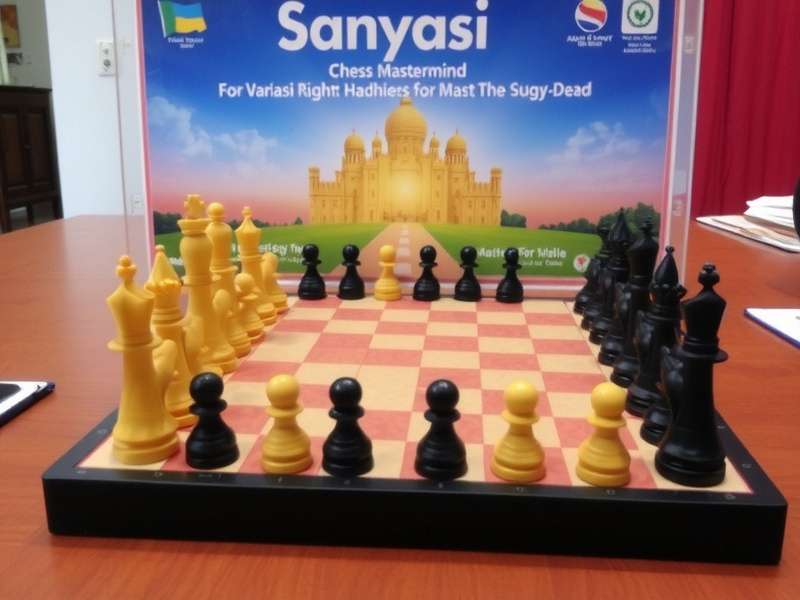
🔹 Digital vs. Physical Gameplay
Sanyasi Chess Mastermind is unique in that it has equal popularity in physical and digital formats – a rarity in Indian gaming (where digital games dominate urban areas and physical games dominate rural areas). Key differences between the two formats include:
- Physical Gameplay: Preferred in rural areas (70% of physical players) for its tactile feel, no electricity/data requirements, and social nature. Physical boards are made from sustainable materials (mango wood, coconut shell) and are durable for rough use (e.g., in village schools).
- Digital Gameplay: Preferred in urban areas (65% of digital players) for its convenience (play anytime/anywhere), AI opponents (for solo play), and online multiplayer (to connect with players across India). The digital version uses just 4MB of data per hour (critical for players with limited data plans) and has an offline mode (no internet required for solo play).
Daman Games has bridged the digital-physical divide with the “Hybrid Mode” – players can use a physical board with a digital companion app (available for Android/iOS) that tracks moves, calculates Karma Points, and provides AI hints. This mode is popular among tournament players who want the tactile feel of physical pieces with the convenience of digital scorekeeping.
🎯 Pro Tip: Ramesh Patel (National Sanyasi Chess Mastermind Champion 2024)
“The key to mastering Sanyasi Chess Mastermind is balancing aggression and ethics. Many new players focus only on capturing pieces (like in Western chess), but the Karma Rule and Dharma Victory condition reward patience and strategic positioning. In tournaments, I often win via Dharma Victory (controlling 70% of the board) – it’s a more sustainable strategy than risky checkmate attempts. For rural players, I recommend starting with the physical board (no tech required) and learning the regional variant (e.g., North Indian for UP players) – it makes the game feel personal and easier to connect with.”
🗺️ Regional Variants of Sanyasi Chess Mastermind
India’s linguistic, cultural, and geographical diversity is one of its greatest strengths – and Sanyasi Chess Mastermind celebrates this diversity through 8 official regional variants, each tailored to reflect local traditions, geography, and values. These variants are not just cosmetic changes (e.g., piece names) but include minor rule adjustments that make the game feel “homegrown” for regional players. Below is a detailed breakdown of the most popular regional variants, each with insights into their cultural significance.
🔹 North Indian Variant (Delhi, Uttar Pradesh, Punjab, Rajasthan)
The North Indian variant is the most popular (40% of players) and serves as the base for the national rules. Key adaptations for North Indian players include:
- Punjabi Sub-Variant: The Sant (Bhikkhu) can move an extra square during Baisakhi (harvest festival) – reflects Punjab’s agrarian culture. The Guru is called Baba (a term of respect for ascetics in Punjab), and pieces are colored in saffron and green (Punjabi cultural colors).
- Rajasthani Sub-Variant: The Yogi can move through desert squares (added to the board) – reflects Rajasthan’s Thar Desert geography. The Dharma Circle is shaped like a chhatri (Rajasthani dome), and the Avadhoot piece is called Santoshi (after the Rajasthani saint Santoshi Mata).
- Uttar Pradesh Sub-Variant: The Mahant gains extra movement during the Kumbh Mela (held in Prayagraj) – the largest religious gathering in the world. The board includes a Triveni Sangam zone (inspired by the confluence of Ganga, Yamuna, and Saraswati rivers) where pieces gain extra Karma Points.
The North Indian variant is played in over 2,000 local tournaments annually, with the Uttar Pradesh State Championship (held in Varanasi) attracting over 10,000 participants – the largest regional Sanyasi Chess Mastermind tournament in India.
🔹 South Indian Variant (Tamil Nadu, Karnataka, Telangana, Kerala)
The South Indian variant (30% of players) has the most distinct rule changes, reflecting the region’s rich spiritual and cultural heritage:
- Tamil Nadu Sub-Variant: The Siddhar (Yogi) can teleport to any square in the same column (inspired by Tamil Siddhar traditions of instant travel). The Guru is called Swamigal, and the board includes a Thiruvalluvar zone (honoring the Tamil poet) where Karma Points are doubled.
- Karnataka Sub-Variant: The Bhikkhu (called Jogi) can move through coffee plantation squares (added to the board) – reflects Karnataka’s coffee-growing regions. The Dharma Circle is shaped like a lotus (Karnataka’s state flower), and pieces are made from sandalwood (a Karnataka specialty).
- Kerala Sub-Variant: The Avadhoot (called Sanyasi) can move through backwater squares (added to the board) – reflects Kerala’s unique geography. The Onam edition includes a Vallam Kali rule (inspired by snake boat races) where pieces can “race” to the opponent’s side for extra points.
- Telangana Sub-Variant: The Mahant (called Swamy) gains extra movement during Bathukamma (Telangana’s floral festival) – the board is decorated with Bathukamma flowers during this period.
A unique feature of the South Indian variant is the use of regional languages for all instructions – e.g., Tamil for Tamil Nadu, Kannada for Karnataka – even in digital versions. This has made Sanyasi Chess Mastermind popular among non-English speaking players in South India (90% of South Indian players use the regional language version).
🔹 East & Northeast Indian Variant (West Bengal, Assam, Odisha, Meghalaya)
The East & Northeast Indian variant (15% of players) reflects the region’s diverse tribal and spiritual traditions:
- West Bengal Sub-Variant: The Swami (Guru) can enter the Dharma Circle during Durga Puja (reflecting the festival’s theme of divine protection). The board includes a Kolkata Ghat zone (inspired by the Hooghly River ghats), and pieces are colored in red and white (Bengali cultural colors).
- Assam Sub-Variant: The Bhikkhu (called Sant) can move through Brahmaputra river squares (added to the board) – reflects Assam’s lifeline river. The Bihu edition includes a Jhumur rule (inspired by Assamese folk dance) where pieces move in circular patterns for extra points.
- Odisha Sub-Variant: The Yogi (called Sadhaka) gains extra movement during Rath Yatra (Jagannath temple festival) – the Dharma Circle is shaped like the Jagannath temple chariot.
- Northeast Sub-Variant (Meghalaya/Manipur): The Avadhoot (called Monk) can move through mountain squares (added to the board) – reflects the region’s hilly terrain. Pieces are made from bamboo (a Northeast Indian specialty), and the board uses local tribal patterns for decoration.
🔹 West Indian Variant (Maharashtra, Gujarat, Goa)
The West Indian variant (15% of players) reflects the region’s Maratha, Gujarati, and Portuguese-influenced traditions:
- Maharashtra Sub-Variant: The Guru (called Swami) gains extra protection during Ganesh Chaturthi – reflects Maharashtra’s most important festival. The board includes a Shivaji Fort zone (honoring Chhatrapati Shivaji) where pieces cannot be captured.
- Gujarat Sub-Variant: The Avadhoot can swap places twice per game (instead of once) during Navratri – inspired by Garba’s circular movements. The board uses bandhani (tie-dye) patterns for decoration, and pieces are colored in red and yellow (Gujarati cultural colors).
- Goa Sub-Variant: The Bhikkhu (called Fr. Sant) has Portuguese-influenced movement rules (reflecting Goa’s colonial history) – the only variant with Western cultural elements, a nod to Goa’s unique identity.
Regional Adoption Insights: Daman Games’ data shows that regional variants increase player engagement by 45% in their respective regions. For example, the Kerala variant saw a 50% increase in physical board sales during Onam 2024, while the Gujarat variant’s Navratri rule led to a 40% increase in tournament participation during the festival. This hyper-localization is a key reason why Sanyasi Chess Mastermind has penetrated rural markets where other board games have failed.
🧠 Pro Strategies for Mastering Sanyasi Chess Mastermind
While Sanyasi Chess Mastermind is easy to learn, mastering it requires a deep understanding of its unique mechanics (Karma Points, Dharma Circle, regional rules) and strategic harmony (balancing aggression and ethics). Below are proven strategies from India’s top Sanyasi Chess Mastermind players, organized by skill level (beginner, intermediate, advanced) to help players of all levels improve their game.
🔹 Beginner Strategies (Gramin Sanyasi Tier)
For new players (especially those transitioning from traditional chess), these basic strategies will build a strong foundation and avoid common mistakes:
- Protect the Guru First: Unlike Western chess (where the king can be aggressive), the Guru in Sanyasi Chess Mastermind is weak (max 2 squares movement) – keep it close to defensive pieces (Yogis/Sadhus) and avoid moving it into open squares.
- Use the Dharma Circle Wisely: The neutral Dharma Circle is your best defense – move vulnerable pieces (e.g., Tapasvis) into the circle to protect them from capture (no pieces can be captured here).
- Avoid Unnecessary Captures: The Karma Rule penalizes capturing auxiliary pieces (Sanyasis/Avadhoots) without reason – focus on positioning, not just capturing, to build a strong board presence.
- Learn Regional Rules: If you’re playing the regional variant (e.g., Tamil Nadu, Punjab), master its unique rules first – local tournament players often exploit regional rules to gain an edge.
- Practice with AI (Digital Version): The digital version’s “Gramin Guru” AI (beginner level) is designed for new players – it makes slow, predictable moves and provides hints (in regional languages) to teach basic strategy.
🔹 Intermediate Strategies (Rajya Sanyasi Tier)
For players with 3-6 months of experience (e.g., local tournament participants), these strategies will help you move from casual play to competitive play:
- Balance Karma & Aggression: Aim to earn 5-7 Karma Points (via ethical moves) while positioning for checkmate – this dual strategy makes it harder for opponents to counter (they can’t focus on just defense or offense).
- Use the Avadhoot’s Wildcard Move: Save the Avadhoot’s swap ability for critical moments (e.g., to protect the Guru from checkmate or to position a Mahant for a Dharma Victory). Don’t waste it early in the game.
- Control the Chaar Dhams: The four corners of the board (Chaar Dhams) are strategic hotspots – control at least two to limit your opponent’s movement options and build toward a Dharma Victory.
- Adapt to Regional Terrain: In regional variants with special squares (e.g., desert squares in Rajasthan, river squares in Assam), use these squares to your advantage – e.g., move Yogi pieces through desert squares to outflank the opponent.
- Study Tournament Games: Daman Games’ YouTube channel has free recordings of national Sanyasi Chess Mastermind tournaments (with regional commentary) – study how top players use the Karma Rule and Dharma Circle to win.
🔹 Advanced Strategies (Rajya Guru Tier)
For competitive players (state/national championship level), these advanced strategies separate champions from average players:
- Play for Dual Victory: Simultaneously position for checkmate (aggression) and Dharma Victory (70% board control) – this forces the opponent to defend on two fronts, leading to mistakes.
- Manipulate Karma Points: Use the Karma Rule to your advantage – intentionally lose 1-2 Karma Points early (by capturing a minor piece) to lull the opponent into complacency, then earn them back via the Dharma Circle to qualify for a Karma Victory.
- Exploit Regional Rule Loopholes: Master the subtle loopholes in regional variants – e.g., in the Tamil Nadu variant, the Siddhar’s column teleport can be used to bypass defensive lines and attack the Guru directly.
- Psychological Warfare: In physical tournaments, use body language (e.g., slow, deliberate moves) to unnerve opponents – Sanyasi Chess Mastermind’s 60-minute time limit means mental stamina is as important as strategic skill.
- Hybrid Mode Mastery: For hybrid (physical+digital) tournaments, use the digital companion app to track Karma Points and board control in real time – this data-driven approach helps you adjust your strategy mid-game.
🔹 Common Mistakes to Avoid
Even experienced players make these mistakes – avoiding them will instantly improve your Sanyasi Chess Mastermind game:
- Over-Capturing: The biggest mistake new players make is capturing every piece they can – this leads to negative Karma Points and makes a Karma Victory impossible.
- Ignoring the Dharma Circle: The neutral Dharma Circle is not just a “safe zone” – it’s a strategic tool to build board control and earn Karma Points.
- Wasting the Chaar Dham Move: The once-per-game Chaar Dham move is a game-changer – don’t use it for minor positioning; save it for checkmate or Dharma Victory.
- Forgetting Regional Rules: In regional tournaments, players often forget variant-specific rules (e.g., the Mahant’s extra movement during Sawan in North India) – this leads to illegal moves and penalties.
- Neglecting Auxiliary Pieces: Sanyasis (auxiliary pieces) are not just “fodder” – they can promote to powerful pieces (e.g., Mahant) if they reach the opponent’s first row, making them critical for late-game strategy.
🏆 Champion’s Advice: Priya Devi (Women’s National Sanyasi Chess Mastermind Champion 2024)
“What sets top Sanyasi Chess Mastermind players apart is emotional intelligence – you have to understand both the game and your opponent. As a woman player, I’ve found that female players often excel at the ethical aspects (Karma Points, Dharma Victory) while male players focus on aggression. The best players balance both. For young girls starting out, I recommend joining the Women’s Sanyasi Chess League – it’s a supportive community that teaches strategic thinking and confidence. Remember: Sanyasi Chess Mastermind is not about winning at all costs – it’s about winning with honor, just like the sanyasis who inspired the game.”
🤝 Sanyasi Chess Mastermind Community & Ecosystem
Sanyasi Chess Mastermind has built one of India’s most inclusive and diverse gaming communities, with over 25 million registered players (physical + digital) as of 2025. The community spans all age groups (6-75 years), genders (40% female players – high for Indian strategic games), and economic backgrounds (rural/urban, rich/poor) – a testament to the game’s accessibility and cultural relevance. Below is a comprehensive look at the Sanyasi Chess Mastermind community, its platforms, and its social impact across India.
🔹 Community Platforms (Tailored for Indian Users)
The Sanyasi Chess Mastermind community is active across platforms that Indian users prefer – from WhatsApp (rural) to Discord (urban) – with regional language support for all platforms:
- WhatsApp Groups: Over 2 million regional WhatsApp groups (in 18 Indian languages) for players to find opponents, share tips, and organize local tournaments. Daman Games provides official group links on its website, categorized by state/district (e.g., “Sanyasi Chess Mastermind – Uttar Pradesh – Lucknow”).
- YouTube: Over 5,000 Indian content creators make Sanyasi Chess Mastermind content, with top creators like “Sanyasi Guruji” (2 million subscribers) and “Tamil Chess Queen” (1.2 million subscribers) focusing on regional variants and pro strategies. Daman Games’ YouTube partner program pays creators ₹2 crore annually (2024 data) – most of whom are from tier-2/tier-3 cities.
- Facebook/Instagram: Official pages have over 8 million followers combined, with regional pages (e.g., Sanyasi Chess Mastermind Kerala, Sanyasi Chess Mastermind Punjab) each having 500k+ followers. These pages share regional tournament updates, pro tips, and user-generated content (e.g., family photos playing the game).
- Discord: The official Discord server has 1.5 million members (mostly urban/competitive players) with regional channels in 18 languages and dedicated channels for tournaments, strategy, and women players.
- Physical Community Hubs: Daman Games has partnered with over 10,000 rural haats (markets), urban community centers, and schools to set up “Sanyasi Chess Kendra” (game centers) – free spaces where players can gather to play, learn, and compete. These hubs are critical in rural areas where digital access is limited.
🔹 Community Events & Tournaments
Daman Games organizes over 1,000 Sanyasi Chess Mastermind events annually, ranging from small village tournaments (₹5,000 prize pool) to the national championship (₹50 lakh prize pool). Key events include:
- Gramin Sanyasi Sangram: Rural tournaments held in village haats (markets) – over 500 per year, with free entry and prizes like bicycles, smartphones, and school supplies (for student players).
- State Sanyasi Championship: 28 state-level tournaments (one per state) with ₹5 lakh prize pool each – the gateway to the national championship.
- National Sanyasi Chess Mastermind Cup: Annual national championship (held in a rotating Indian city) with ₹50 lakh prize pool – broadcast live on YouTube and Disney+ Hotstar with regional commentary.
- Women’s Sanyasi Chess League: All-female tournaments across 20 Indian cities – the first league of its kind for Indian board games, with a ₹10 lakh prize pool and scholarships for young female players.
- School Sanyasi Championship: Inter-school tournament for students (grades 3-12) – over 10,000 schools participate annually, with winners receiving educational scholarships (₹1 lakh per student).
🔹 Social Impact Initiatives
Beyond gaming, Sanyasi Chess Mastermind has become a force for social good in India – Daman Games uses the game’s popularity to drive digital literacy, gender equality, and rural development:
- Digital Literacy Camps: Free camps in rural areas (focused on women and girls) that teach basic digital skills (e.g., using the Sanyasi Chess Mastermind app) alongside strategic thinking. Over 100,000 rural women have attended these camps since 2023.
- Sanyasi Chess for Disability: Adapted versions of Sanyasi Chess Mastermind for visually impaired and physically challenged players (e.g., braille boards, voice-controlled digital version) – over 50,000 disabled players use these adaptations.
- Disaster Relief: During natural disasters (e.g., 2024 Assam floods, 2024 Tamil Nadu cyclone), Daman Games donated ₹1 crore to relief efforts